Inside Los Angeles: An 8-Match World Cup 2026 Guide
Los Angeles delivered one of the most data-rich stages of the 2026 FIFA World Cup, hosting eight matches at SoFi Stadium (branded Los Angeles Stadium during the event) and a 39-day FIFA Fan Festival a...
Inside Los Angeles: An 8-Match World Cup 2026 Guide
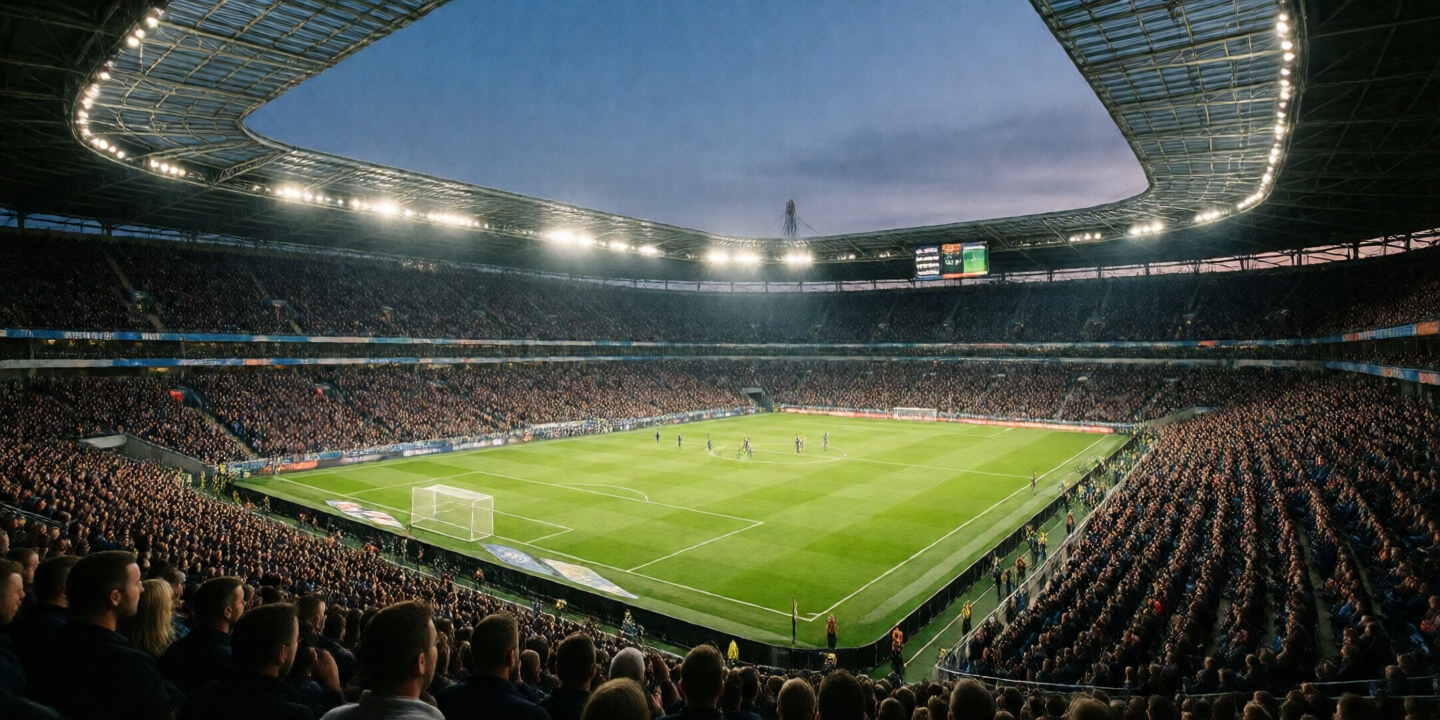
Los Angeles delivered one of the most data-rich stages of the 2026 FIFA World Cup, hosting eight matches at SoFi Stadium (branded Los Angeles Stadium during the event) and a 39-day FIFA Fan Festival at the LA Memorial Coliseum. Match Daily's comparison of the three headline venues puts Los Angeles ahead on fan access, New York New Jersey ahead on final-stage prestige, and Mexico City's Estadio Azteca ahead on history, with a 2,240-metre altitude that reshapes tactics. The tournament ran June 11 to July 19, 2026, across 16 cities and 104 matches, the first with 48 teams. Eight of the 12 third-placed teams advanced, so a third-place finish could still reach the knockouts. If you follow the sport for tactics, judge a venue by its knockout inventory and conditions, not its capacity. Use the numbers below to choose where to focus.
Most fans assume the biggest stadium automatically hosts the biggest football. I used to assume it too, and I apologise for the many spreadsheets I built on that assumption before the schedule corrected me. Capacity is the number everyone quotes, yet it explains very little about what a venue actually gave the tournament. Estadio Azteca holds roughly 83,000 people and still hosted only five matches, while SoFi Stadium holds roughly 70,000 and hosted eight. Multiply it out and the "smaller" Los Angeles venue offered about 560,000 seat-slots against Mexico City's 415,000. You, dear reader, who bought a jersey before reading the group draw, may find that mildly offensive. Believe it or not, the spreadsheet agrees with me.
So this guide runs a three-round comparison between Los Angeles, New York New Jersey and Mexico City. It is written for Match Daily readers who want more than a stadium postcard.

Looking for the daily numbers behind every fixture? The next step is a click away.
The Quick Comparison
| Dimension | Los Angeles (SoFi Stadium) | New York New Jersey (MetLife Stadium) | Mexico City (Estadio Azteca) |
|---|---|---|---|
| Matches hosted | 8 | 8 | 5 |
| Share of all 104 matches | 7.7% | 7.7% | 4.8% |
| Approximate capacity | 70,000 | 82,500 | 83,000 |
| Headline fixtures | United States opener, July 10 quarterfinal | July 19 final | June 11 tournament opener |
| Fan programme | 39-day Fan Festival at the LA Memorial Coliseum | Regional fan events | Regional fan events |
| Playing conditions | Sea level, canopy roof | Open air, summer humidity | About 2,240 m altitude |
Two quick readings from the table, offered with the usual caveat that I may be wrong about the capacity figures by a few thousand seats. First, with 104 matches spread over 16 cities, the average host city staged 6.5 matches. Los Angeles and New York New Jersey sit about 23% above that average, and Mexico City sits about 23% below it. Second, the share column makes a quiet point. A venue's prestige is driven by which eight or five matches it received, not by how many people fit inside, and that is exactly what the three rounds below test.
If you want the reference frame for the format itself, the FIFA World Cup entry on Wikipedia lists the tournament history and structure, and it remains the tidiest neutral summary I know. For deeper venue notes, see our host city and stadium guide.

Round 1: Which Venue Has the Bigger Stage?
New York New Jersey wins the stage round, because MetLife Stadium hosted the July 19 final and eight matches overall. Los Angeles matched it on volume with eight matches, including the United States opener and a July 10 quarterfinal. Mexico City's Estadio Azteca hosted only five, but opened the tournament on June 11.
The honest complication is that "stage" has two meanings. The first is prestige, and a final cannot be beaten for it. The second is sheer tactical inventory: how many meaningful, high-pressure matches a neutral viewer could watch in one place. Under the new 48-team format, the group stage alone contained 72 matches (12 groups of four, six matches each), and a new round of 32 added 16 more knockout fixtures to the usual rounds. Because the eight best third-placed teams went through, roughly 67% of third-placed teams (8 of 12) survived. That means group-stage matches carried real consequences even for sides that looked beaten, which is the first thing a typical venue preview forgets to mention.
Here is how I would rank each venue's stage value:
- New York New Jersey: eight matches plus the final, the highest ceiling.
- Los Angeles: eight matches, a host-nation opener and a quarterfinal, the best balance of volume and stakes.
- Mexico City: five matches, but the opener and the deepest historical weight, since Estadio Azteca was the first stadium to host a World Cup match in three different tournaments.
I would defend that order in public, nervously, but I would defend it. Believe it or not, I do.
Ready to follow the knockout bracket with a clear head? Here is where we keep the daily breakdowns.
Round 2: Which Venue Gives Fans the Better Experience?
Los Angeles wins fan experience on access, with a FIFA Fan Festival at the LA Memorial Coliseum and Official Fan Zones across the region, backed by 39 days of celebrations. Ticketless fans therefore had a dependable place to watch matches. Other host cities ran festivals too, but I compared only Los Angeles in detail.
The official host committee frames it plainly: "Eight matches. 39 days of fan celebrations. One unforgettable summer in Los Angeles," according to the FIFA World Cup 26 Los Angeles site. The 39-day figure is worth a second look, because the tournament itself ran exactly 39 days, from June 11 through July 19. In other words, the Fan Festival was not a weekend add-on. It covered the entire competition, including the many days when Los Angeles had no match at all. With only eight fixtures across 39 days, that works out to a match on roughly one day in five, so the fan programme carried most of the city's World Cup identity.
That is the second thing a standard top-10 article skips. For the typical visitor, the experience of a host city was mostly decided on non-match days, and a city with fewer matches but a stronger festival can feel busier than one with more fixtures. Practical tips I would give any future visitor:
- Plan your non-match days first, since there were more than three times as many of them as match days in Los Angeles.
- Treat the Official Fan Zones as the backup for a sold-out match, not as a consolation prize.
- Check transit before kickoff, because stadium access is the real bottleneck in every host city.
Our readers regularly ask how to build a match-day plan, so we cover that in our match day planning checklist.

Want the schedule and fan-zone notes in one place? Take a look at the full coverage.
Round 3: Which Venue Rewards Tactical Viewing?
Mexico City rewards tactical viewing most, because Estadio Azteca sits at about 2,240 metres, where thinner air changes pressing intensity and substitution timing. Los Angeles offers the opposite: a sea-level bowl under a canopy roof where tempo stays steadier. New York New Jersey sits between them, open to summer heat and humidity.
Here is the part I am a little embarrassed to be so excited about. Atmospheric pressure at 2,240 metres is roughly 77% of the sea-level value, so every breath delivers noticeably less oxygen. Teams used to playing at altitude can sustain a high press for longer, while visiting sides tend to compress their lines and conserve effort in the second half. That is a testable prediction rather than a hunch: watch the distance between a team's defensive and attacking lines in minutes 60 to 90 and compare it with the same team's sea-level matches. For analysts, Mexico City was the cleanest natural experiment in the tournament.
Los Angeles has its own value, though. Stable conditions make it the best venue for comparing teams on equal terms, because tempo and ball speed are less contaminated by weather. If your interest is player stats and shape analysis, the sea-level data is easier to trust. New York New Jersey was the venue where heat and humidity could decide late substitutions, so I would watch fatigue indicators there. We track each of these in our team tactics and player stats hub.
For readers who also follow prediction markets, please check the legal age and rules in your jurisdiction first, and treat any wager as entertainment spending rather than a plan.

The Final Score & Who Should Pick What
Scoring each round out of three, New York New Jersey takes the stage round, Los Angeles takes fan experience, and Mexico City takes tactical interest. That makes Los Angeles the most balanced all-rounder, finishing no lower than second in any category. The tally is a tie in outright wins, so the recommendation has to depend on what you wanted from the tournament, and I admit that is a slightly unsatisfying place for a numbers person to land.
Who should pick what:
- Choose Los Angeles if you want volume and access: eight matches, a United States opener, a quarterfinal and a 39-day Fan Festival.
- Choose New York New Jersey if prestige is the priority and the July 19 final is the memory you want.
- Choose Mexico City if you care about football history and the tactical effects of altitude, and can accept only five matches.
One last contrarian conclusion, with apologies to the capacity-obsessed: the best venue is the one whose schedule matches your question, not the one with the most seats. Believe it or not, I do hold that view, even after building the spreadsheet that proved my own earlier assumption wrong.
Ready to carry this analysis into the next fixture list? Here is where to continue.
Frequently Asked Questions
Q: What was the format of the World Cup 2026 football tournament?
A: The 2026 World Cup was the first to feature 48 teams, playing 104 matches across 16 cities in the United States, Canada and Mexico. The group stage had 12 groups of four, giving 72 matches, and the eight best third-placed teams joined the winners and runners-up in a new round of 32. The tournament ran from June 11 to July 19, 2026.
Q: How many matches did Los Angeles host?
A: Los Angeles hosted eight matches at SoFi Stadium, which carried the name Los Angeles Stadium during the tournament. That is about 7.7% of all 104 matches, including the United States opener on June 12 and a quarterfinal on July 10. The city also ran a FIFA Fan Festival at the LA Memorial Coliseum for 39 days.
Q: What is the difference between Los Angeles and Mexico City as World Cup venues?
A: Los Angeles offered more matches and a longer fan programme, while Mexico City offered history and altitude. SoFi Stadium hosted eight matches at sea level, while Estadio Azteca hosted five at roughly 2,240 metres, including the June 11 opener. If you value tactical variety, Mexico City is the more interesting venue; for volume, Los Angeles wins.
Q: Why did a third-placed team still have a chance to advance?
A: The expanded format let the eight best of the 12 third-placed teams reach the round of 32. That means roughly two thirds of third-placed teams (about 67%) advanced. Goal difference and goals scored therefore mattered more than ever, so even a loss in the final group match did not necessarily end a run.
Q: How do I follow match predictions and team tactics without getting overwhelmed?
A: Pick two or three metrics and track them consistently rather than reading everything. Start with expected goals, pressing intensity and set-piece output, then compare each team's numbers across venues, since altitude and heat can distort raw results. Match Daily publishes daily previews and player stats in one place, which keeps the routine to about ten minutes.
Q: Is it worth buying match tickets just to see one game?
A: Yes, if you plan the non-match days as carefully as the match itself. With only eight matches across 39 days, Los Angeles had roughly four non-match days for every match day, so the fan zones and Fan Festival carried much of the experience. Budget for transit and accommodation as well, because those costs often exceed the ticket price.
End of Transmission
Thank you for reading. Explore more articles from the archive.
Match Daily · Article #90 · 2026